Description
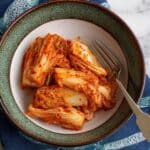
This traditional homemade Korean kimchi recipe guides you through the gradual fermentation process to create a flavorful, spicy fermented cabbage dish. Using fresh Chinese cabbage, sea salt, and a vibrant chili paste mixture made with garlic, ginger, pear, and Korean chili flakes, this recipe results in a crunchy, tangy condiment perfect for adding depth to many meals. Fermentation allows the kimchi to develop its characteristic tang, with bubbles indicating the start of the process. This recipe includes tips on salting, mixing, and storing for the best homemade kimchi experience.
Ingredients
Scale
Main Ingredients
- 2–3 Chinese leaf (Napa cabbage), chopped into bite-size pieces, weighing 2kg prepared weight
- 40–60g sea salt (3% of the cabbage weight)
- 1 tbsp seaweed (wakame), lightly rinsed
Vegetables and Aromatics
- 1 carrot, shredded
- ½ leek, shredded
- 2 spring onions, chopped
- 40g onion, chopped
- 40g garlic (about 10 cloves), peeled
- 5g ginger, chopped
- 1 small pear, cored and chopped
Spices
- 40g Korean chilli flakes (adjust quantity for milder heat)
Equipment
- 1 2-litre sterilised jar
- Fermentation weight or makeshift weight (e.g., baking beans in a bag)
Instructions
- Prepare the Cabbage and Salt: Chop the Chinese leaf into bite-size pieces and weigh until you have 2kg. Wash thoroughly under running water. In a large bowl, mix the chopped cabbage with sea salt and the lightly rinsed seaweed. This initiates the salting process that draws out moisture essential for fermentation.
- Salt and Soak: Over the next 3-4 hours, mix the salted cabbage and seaweed every now and then using your hands. You should observe liquid releasing from the cabbage. The goal is for the cabbage leaves to become bendable without breaking, indicating proper wilting and moisture extraction.
- Prepare the Vegetables and Chili Paste: While the cabbage soaks, shred the carrot and leek, and chop the spring onions; set aside. To make the chili paste, use a food processor to blitz together the onion, garlic, ginger, and pear until smooth. Add Korean chili flakes and blitz again until fully combined, creating a spicy, flavorful paste.
- Drain the Cabbage: Drain the salted cabbage mixture thoroughly, squeezing out as much water as possible. This ensures the kimchi does not become overly watery. This draining step may take about 10 minutes to remove excess liquid effectively.
- Mix Ingredients: In a large bowl, toss the drained cabbage with the shredded carrot, leek, and chopped spring onions. Add the chili paste and blend everything well so the vegetables are evenly coated with the spicy mixture.
- Jar the Kimchi: Transfer the mixture to a sterilised 2-litre jar. Press down firmly to remove air pockets and leave about a 1-inch space from the top. Place a fermentation weight or a bag containing baking beans on top to keep the vegetables submerged. Set a plate under the jar to catch any overflow during fermentation.
- Ferment: Leave the jar at room temperature for 24-48 hours. You will start to see bubbles forming inside, a sign that fermentation is active. Taste the kimchi periodically to assess the flavor development.
- Store and Enjoy: Once fermentation reaches your preferred taste (usually after 3 days), move the kimchi to the refrigerator to slow the fermentation. For convenience, transfer into smaller jars for daily use or gift-giving. Enjoy as a flavorful side dish or condiment to many meals.
Notes
- Adjust the quantity of Korean chili flakes for milder or spicier kimchi according to your preference.
- Ensure the jar and all equipment are sterilised to prevent unwanted bacteria growth.
- Use a fermentation weight to keep the kimchi submerged under its liquid to avoid mold growth.
- If you don’t have a fermentation weight, a sealed bag filled with baking beans works as a substitute.
- Kimchi typically ferments faster in warmer environments; cooler temperatures will slow the fermentation and develop different flavors.
- Keep an eye on the jar in case of overflow during active fermentation to avoid mess.
- Kimchi can be stored in the refrigerator for several weeks, with flavors intensifying over time.
- Prep Time: 30 minutes
- Cook Time: 0 minutes
- Category: Fermented Vegetables
- Method: No-Cook
- Cuisine: Korean
Keywords: kimchi, fermented cabbage, Korean kimchi, homemade kimchi, spicy fermented vegetables, probiotic food